
Artificial intelligence is moving faster than most of us can track, and the risks are climbing just as fast. What does ethical AI development actually mean? Why does it matter right now? How will it change the tech you rely on every day? You’re asking because these questions affect everything from the apps on your phone to the systems deciding what happens in your life. And you’re right to ask.
Responsible AI rests on a few core pillars: transparency, bias mitigation, data privacy, security. Leading researchers, cybersecurity specialists, and AI practitioners are tackling these head-on. They’re building governance frameworks and systems meant to be fair, accountable, and human-centered, shipping real solutions instead of white papers. The actual work? Grappling with tradeoffs between innovation and safety, between speed and oversight. Every choice carries weight. These aren’t hypothetical tensions anymore; they’re the daily friction that shapes what gets built and what doesn’t.
The latest research papers, industry standards, and expert commentary form the foundation here. Theory matters. But what actually counts is seeing how companies build ethical AI systems in practice, ones that hold up when they meet real-world constraints and unexpected edge cases. This piece moves from foundational concepts to the concrete strategies teams are using right now to avoid the most common pitfalls, offering both the conceptual scaffolding and the operational details you’d need to apply these ideas yourself.
Working through the AI frontier: why ethics must lead innovation
AI’s moving faster than the safeguards built to contain it. Speed buys you efficiency, discovery, money. Skip the guardrails though, and you’re left with bias, opacity, systems that actually hurt people. That’s what’s happening right now, and it’s the core tension nobody’s figured out how to resolve.
When a company launches a powerful hiring algorithm without audits, you’re looking at potential disaster, biased decisions, legal liability, talent lost to flawed screening. But stress-test that same tool, make it explainable, align it with ethical AI development? The outcomes shift completely. One path leads to lawsuits and reputational damage. The other builds trust, catches bias before it propagates, and actually attracts better candidates because people see fairness in the process. The difference isn’t marginal. It’s the gap between a tool that destroys value and one that creates it.
Transparency builds trust. Secrecy? That’s how you get backlash—just ask any social platform drowning in it.
So, developers, regulators, and businesses must embed oversight, measure impact, and iterate responsibly.
Deconstructing algorithmic bias: from data to deployment
Algorithmic bias doesn’t start with a rogue robot plotting world domination, sorry, Terminator fans. It begins quietly in data. Historical bias crops up when training data reflects past inequalities, like decades of skewed hiring or lending decisions. Algorithmic bias, by contrast, stems from flawed model assumptions, proxy variables, or optimization goals that accidentally favor one group over another.
The impact is REAL. Hiring tools have downgraded resumes tied to women’s colleges. Loan algorithms have offered lower credit limits to minority applicants. Risk assessment systems in criminal justice have flagged certain communities as “high risk” at disproportionate rates (ProPublica, 2016). It’s less sci-fi apocalypse, more subtle systemic tilt.
Before deployment, proactive data auditing is critical:
- Analyze representation gaps across gender, race, age, and geography.
- Identify proxy variables (like ZIP codes) that mirror protected traits.
- Compare outcomes against historical discrimination patterns.
Then measure fairness. Demographic parity checks whether outcomes are evenly distributed across groups. Equalized odds ensures error rates are similar regardless of demographic category (Hardt et al. 2016). These metrics won’t guarantee perfection. But they expose imbalance.
Pro tip: audit early, not after public backlash. True ethical AI development means questioning your datasets before they scale. Once biased systems go live, they move fast, and that’s the hard part. Catching problems early costs less, fixes easier, and doesn’t wreck your reputation in the process.
The black box problem: achieving transparency and explainability (xai)
Have you ever wondered why an AI system approved one loan application but rejected another? Or why a medical model flagged a tumor as malignant? When advanced systems like deep neural networks process millions of parameters, their internal logic becomes nearly impossible for humans to trace. This is what experts call the black box problem—a situation where inputs and outputs are visible, but the reasoning in between is opaque.
High accuracy sounds great until it doesn’t. Without transparency, you’re stuck. How do you debug errors? Audit for bias? Build actual trust? In healthcare and finance, sectors where a wrong call costs lives or fortunes, unexplained decisions turn into legal nightmares, PR disasters, real human suffering (European Commission, 2020). That’s alarming. And it should be alarming. Because the cost of getting it wrong isn’t abstract.
So what can be done? Fortunately, explainable AI (XAI) offers practical tools:
- LIME (Local Interpretable Model-agnostic Explanations): Explains individual predictions by approximating complex models locally.
- SHAP (SHapley Additive exPlanations): Uses game theory to assign contribution values to each feature in a prediction.
Equally important is transparency that doesn’t require a PhD to understand. Model cards and datasheets for datasets spell out what they’re designed for, where they fall short, and what could go wrong. That’s the foundation of ethical AI development.
As discussed in how generative ai is changing content creation workflows, understanding AI systems isn’t optional anymore. The real question is: would you trust a system you can’t question?
Establishing accountability: who is responsible when AI fails?
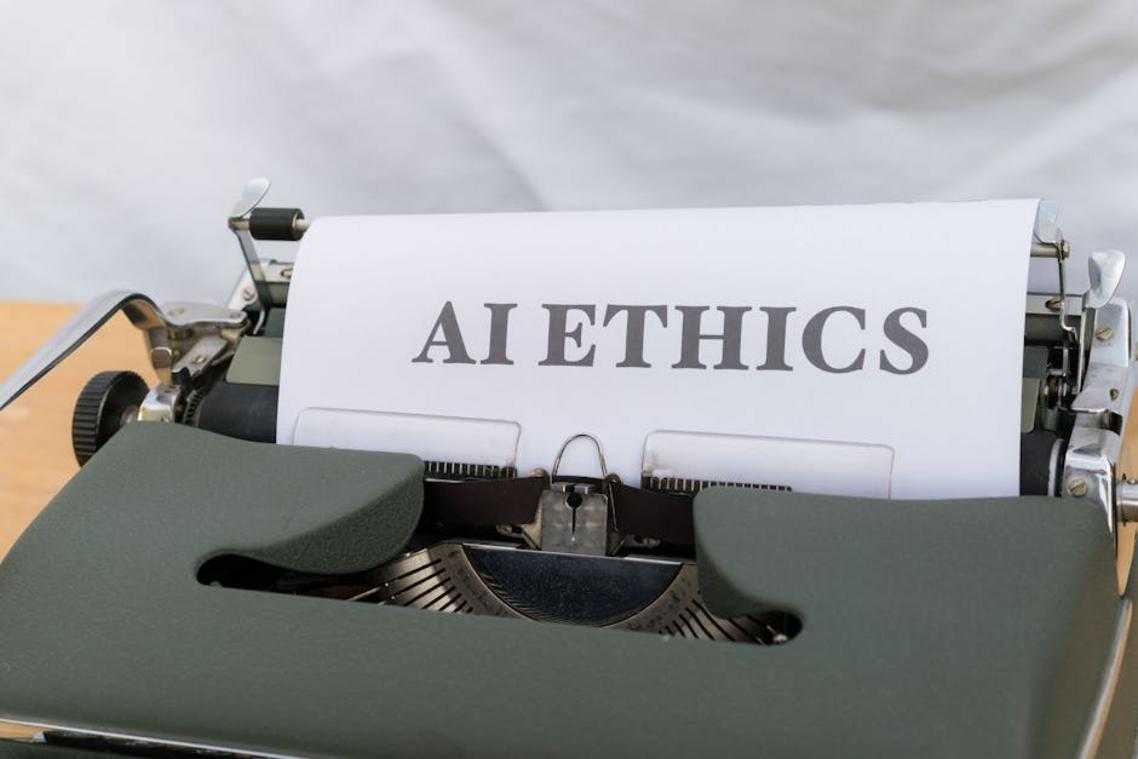
When an autonomous system causes real harm, the obvious first question hits hard: who’s responsible? The developer who built it? The person who deployed it? The owner cashing in on it? That’s the accountability gap, basically, responsibility gets murky because the system’s making half the decisions. Nobody knows who to blame.
Closing the accountability gap in practice
Start by building Human-in-the-Loop (HITL) systems into your operations. These systems put a qualified human in charge of reviewing or approving high-stakes outputs before anything gets done. Take healthcare AI diagnostics, a physician’s got to make the final call, not the model. That accountability? It’s crystal clear.
Testing needs to go deeper than just checking if things work. Adversarial testing, basically trying to break the system on purpose, catches problems surface-level checks miss. Edge-case simulations do the same. Self-driving car developers run simulations for freak weather and unusual road conditions long before they put cars on public streets, but nobody looks forward to that kind of tedious, repetitive work. Yet it’s the only way to find what’ll actually kill you on the road.
Finally, every organization needs a defined incident response plan. This should outline how failures are detected, reported, investigated, and corrected. Clear documentation ensures transparency and supports ethical ai development.
In short, accountability isn’t automatic, it must be designed, tested, and maintained deliberately.
Building an ethical AI framework: a practical blueprint
High-level AI principles sound great in boardrooms. But unless they translate into tickets, standups, and code reviews, they’re just posters on a wall, and we’ve all seen those. Ethical AI development only works when it’s built into the process, not bolted on at the end. That’s the difference between saying you care and actually doing the work.
Form a Cross-Functional Ethics Committee. Engineers shouldn’t own this alone. You need lawyers mapping regulatory risks, ethicists wrestling with moral tradeoffs, product managers tracking how real users get affected, and security leads. Homogeneous teams miss things. Diverse ones don’t. According to Harvard Business Review, they make better decisions up to 87% of the time, which makes sense when you’ve got enough perspectives in the room to catch what a single discipline would gloss over.
Step 2: Conduct Ethical Risk Assessments
Run a pre-mortem: imagine your AI system failed spectacularly. Who was harmed? How? This exercise surfaces bias, privacy leaks, or misuse scenarios early (think “Minority Report,” but prevent it).
Step 3: Integrate Ethics into the Development Lifecycle
Add:
- Bias and fairness peer reviews
- Ethical checkpoints in Agile sprints
- Documented model assumptions
Pro tip: treat fairness metrics like performance benchmarks, non-negotiable.
Step 4: Commit to Post-Deployment Monitoring. Models drift. Users behave unpredictably, that’s just how it goes. You’ll need continuous audits and feedback loops to catch problems before they spiral. Launch isn’t the finish line. It’s the starting gun.
The path forward: cultivating a culture of responsible innovation
Responsible AI isn’t holding back progress, it’s directing it. When you talk about responsibility, you’re really talking about systems that are transparent, fair, and secure right from the start. Smart code matters. But oversight? It matters too. And they’ve got to work together, not as trade-offs, but as a single foundation.
In simple terms, this requires:
- Explainable AI (XAI), meaning models humans can understand.
- Fairness metrics, tools that measure bias in outcomes.
- Governance, the rules teams follow before launch.
Some argue this slows innovation. Clarity prevents mistakes and builds trust. Treat ethics as engineering excellence.
As we explore the complexities of ethical AI development and the best practices to ensure responsibility in technology, it’s equally important to consider how we can optimize our everyday devices—like boosting the speed and battery life of our laptops—to better support sustainable tech usage – for more details, check out our Laptop Optimization Guide: Boost Speed and Battery Life.
The future of AI starts with the choices you make today
You came here to understand how AI’s evolving and what it means for your security, productivity, and long-term strategy. Now you’ve got a clearer picture of the innovations reshaping things, and the risks that come with moving too fast. Without the right guardrails, you’re exposed.
AI’s advancing fast. Without ethical frameworks, strong cybersecurity, and thoughtful rollout strategies, organizations face real consequences: compliance failures, biased outputs that damage customer trust, and security holes that expose sensitive data to attackers. Powerful tools need guardrails, not as an afterthought, but baked into development from day one. Finding those gaps post-deployment isn’t just expensive; it’s often too late to recover.
The good news? You don’t have to navigate it alone.
Keep pace with what’s coming next, emerging threats, smarter automation, responsible AI. Thousands of tech professionals trust our expert breakdowns to stay sharp. You’ll get the latest AI insights, cybersecurity updates, and strategies you can actually use, delivered straight to your inbox.
Don’t wait for disruption to force your hand. Explore the latest updates now and take control of your AI future today.
 Zayric Veythorne has opinions about ai and machine learning insights. Informed ones, backed by real experience — but opinions nonetheless, and they doesn't try to disguise them as neutral observation. They thinks a lot of what gets written about AI and Machine Learning Insights, Gadget Optimization Hacks, Expert Breakdowns is either too cautious to be useful or too confident to be credible, and they's work tends to sit deliberately in the space between those two failure modes.
Reading Zayric's pieces, you get the sense of someone who has thought about this stuff seriously and arrived at actual conclusions — not just collected a range of perspectives and declined to pick one. That can be uncomfortable when they lands on something you disagree with. It's also why the writing is worth engaging with. Zayric isn't interested in telling people what they want to hear. They is interested in telling them what they actually thinks, with enough reasoning behind it that you can push back if you want to. That kind of intellectual honesty is rarer than it should be.
What Zayric is best at is the moment when a familiar topic reveals something unexpected — when the conventional wisdom turns out to be slightly off, or when a small shift in framing changes everything. They finds those moments consistently, which is why they's work tends to generate real discussion rather than just passive agreement.
Zayric Veythorne has opinions about ai and machine learning insights. Informed ones, backed by real experience — but opinions nonetheless, and they doesn't try to disguise them as neutral observation. They thinks a lot of what gets written about AI and Machine Learning Insights, Gadget Optimization Hacks, Expert Breakdowns is either too cautious to be useful or too confident to be credible, and they's work tends to sit deliberately in the space between those two failure modes.
Reading Zayric's pieces, you get the sense of someone who has thought about this stuff seriously and arrived at actual conclusions — not just collected a range of perspectives and declined to pick one. That can be uncomfortable when they lands on something you disagree with. It's also why the writing is worth engaging with. Zayric isn't interested in telling people what they want to hear. They is interested in telling them what they actually thinks, with enough reasoning behind it that you can push back if you want to. That kind of intellectual honesty is rarer than it should be.
What Zayric is best at is the moment when a familiar topic reveals something unexpected — when the conventional wisdom turns out to be slightly off, or when a small shift in framing changes everything. They finds those moments consistently, which is why they's work tends to generate real discussion rather than just passive agreement.